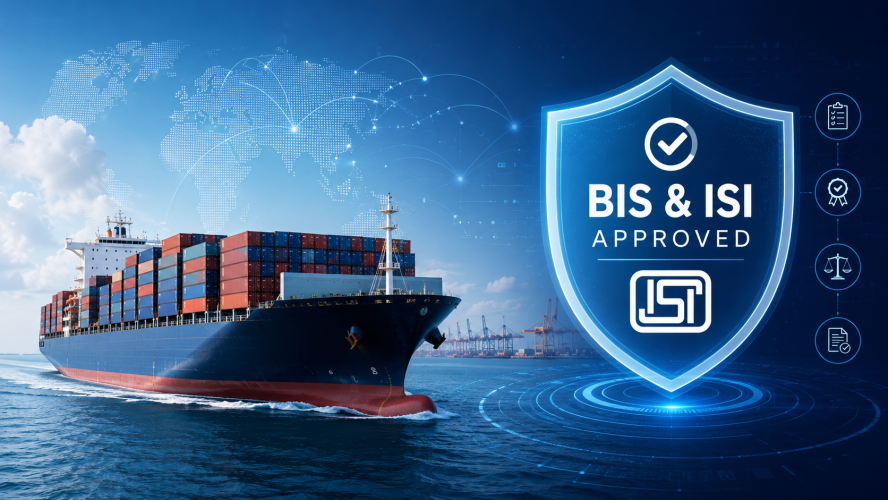
ISI & BIS Import Customs Guide for India (2026 Regulations)
For Indian small and medium enterprises (SMEs), manufacturers, and corporate procurement heads, sourcing high-margin goods internationally is the fastest way to scale. However, entering the China-to-India trade corridor in 2026 means running headfirst into a complex regulatory wall.
The Bureau of Indian Standards (BIS) and the Directorate General of Foreign Trade (DGFT) have significantly strengthened border enforcement. In 2026, treating ISI marking or Compulsory Registration Scheme (CRS) compliance as an afterthought isn’t just a minor administrative risk it is a critical logistical bottleneck that can result in customs detentions, severe demurrage costs, or outright shipment rejection.
This guide provides a practical diagnostic overview of the 2026 BIS framework, highlighting common cross-border compliance problems and the operational solutions required to clear your cargo smoothly.
The Problem: The “Customs Compliance Wall” Facing Indian Importers
Many Indian businesses identify high-quality overseas suppliers, finalize unit economics, and wire a 30% advance deposit, only to discover their cargo is blocked upon reaching an Indian port. In 2026, the primary compliance challenges include:
1. Misjudging Expanding Quality Control Orders (QCOs)
The list of products requiring mandatory BIS certification expands every quarter.
-
The 2026 Reality: Everyday commercial furniture (beds, desks, chairs) fell under strict mandatory ISI marking constraints. Furthermore, “Scheme-X” is fully active, requiring rigid BIS oversight for heavy industrial machinery, electrical components, cranes, and pumps. Assuming a product category is exempt based on outdated lists can lead to immediate border holding.
2. The Supplier “Certificate Mismatch” Trap
Importers frequently trust a supplier’s verbal confirmation: “Yes, we have a BIS certificate.” However, a BIS license is tied strictly to a specific factory location, brand, and exact model number. If your supplier shifts production to a secondary sub-contracted facility, or if the model number on your commercial invoice varies by a single digit from the registered certificate, Indian Customs’ automated Risk Management System (RMS) will flag and detain the cargo.
3. Stricter New Financial & Testing Rules
The updated Grant of Licence (GoL) guidelines mandate that 50% of the Annual Minimum Marking Fee (MMF) must be paid upfront during application processing. Additionally, the shift to newer hazard-based safety standards (such as IS/IEC 62368-1:2023 for electronics and IT gear) means old test reports are no longer accepted at the border.
Without an active, physically verified Authorized Indian Representative (AIR) legally binding the foreign factory to Indian standards, clearing customs independently is exceptionally difficult.
Stuck with an ISI/BIS compliance issue or worried about customs hold-ups?
Don’t risk your capital. Talk directly with our India-China trade experts on WhatsApp right now for an instant compliance check.
The Solution: A Proactive, Sourcing-Integrated Compliance Strategy
Overcoming these compliance hurdles requires moving away from reactive border clearing and adopting a proactive strategy integrated directly into your sourcing phase.
[ Sourcing Phase ] ➔ [ Verification Phase ] ➔ [ Logistics Phase ] ➔ [ Customs Clearance ]
  Identify Goods        Verify Factory BIS       LCL/FCL Consolidation    Smooth Port Entry
  & Check IS Standards  & Appoint Active AIR     & Pre-Shipment Audit     via SWIFT 2.0 System
Step 1: Pre-Purchase Technical Mapping
Before issuing a Letter of Credit (LC) or wire transfer, map your product’s precise HS Code directly to its corresponding Indian Standard (IS Number). Determine immediately whether your cargo falls under:
-
Scheme I (ISI Mark): Requires foreign factory audits and intensive product testing (e.g., steel, chemicals, appliances, furniture).
-
Scheme II (CRS): Requires product sample testing inside NABL-accredited Indian laboratories (e.g., electronics, IT hardware, smart devices).
Step 2: Live Credentials Verification via Manak Online
Never accept a PDF copy of a certificate at face value. Importers must cross-reference active license numbers directly through the government’s Manak Online portal. Verify that the manufacturer’s plant address matches the physical origin of the goods and ensure that the brand name is explicitly endorsed on the license.
Step 3: Secure an Experienced Sourcing & Handling Partner
Navigating overseas factory audits, coordinating sample shipments to Indian labs, managing the Performance Bank Guarantee (PBG), and dealing with the updated digital SWIFT 2.0 customs dashboards requires boots on the ground where your products are made.
How We Do Import Streamlines Your Supply Chain
At We Do Import, we don’t just act as a standard freight forwarder or freight broker. We function as your dedicated end-to-end global sourcing and risk mitigation partner, leveraging over 22 years of real-world international trade experience to insulate your business from compliance liabilities.
Here is how our framework eliminates your import risks:
-
Factory-Level Pre-Audits: Before you commit your capital, our specialized team conducts direct verification of foreign manufacturers. We review their factory layouts, internal testing capabilities, and active BIS/FMCS licenses on-site to guarantee total alignment with Indian Customs requirements.
-
Flawless Documentation Management: We manage the entire cross-border paper trail. From ensuring exact model consistency across your Commercial Invoice, Packing List, and Bill of Lading, to integrating compliance records cleanly into the Indian Customs single-touch interface, we prevent documentation-driven port delays.
-
Integrated LCL/FCL Secure Logistics: Whether you are importing shared container loads (LCL) of premium furniture or full container loads (FCL) of electronic components, we handle the entire physical journey. We ensure your cargo is correctly labeled with physical, customs-compliant ISI or CRS markings before it ever leaves the foreign port.
Don’t leave your capital trapped at the port. Partner with an established industry expert who understands the complexities of 2026 customs clearance.
Contact We Do Import Today to request an expert consultation and run a comprehensive compliance check on your next production run.









Leave a Reply