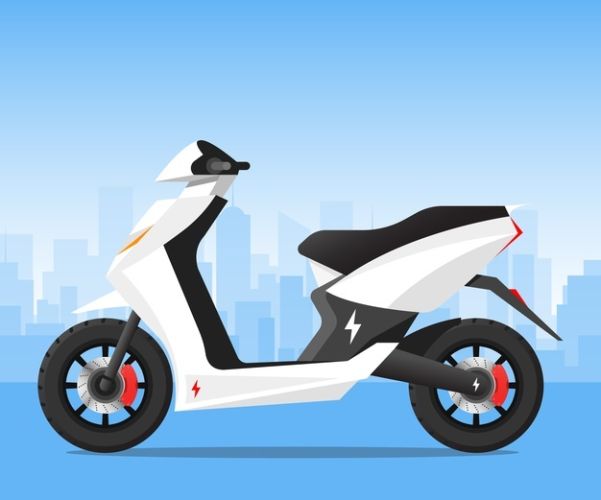
How to Import Electric Scooters from China to India
India’s electric scooter import market looks very different from what it did in 2021. Policy has increasingly pushed the EV ecosystem toward domestic manufacturing, localisation and component-level sourcing rather than dependence on fully built imported vehicles. For businesses considering sourcing electric scooters from China in 2026, the question is no longer simply “Which finished scooter should I import?” it is “Should I import the vehicle as a CBU, source a CKD/SKD kit, or import components for assembly in India?”
That distinction can materially change your customs exposure, compliance requirements and landed cost.
Here’s what’s actually changed and what a realistic China-to-India electric scooter sourcing strategy looks like in 2026.
Quick Answer: Should You Still Import Complete Electric Scooters?
For many commercial importers, importing complete built units (CBUs) may not be the most cost-efficient route.
India’s EV policy environment increasingly favours localisation and domestic manufacturing. Depending on the product classification and applicable customs structure, importing a scooter as a CKD (completely knocked down) or SKD (semi-knocked down) kit for assembly in India may offer a more viable model than importing finished vehicles.
The opportunity therefore extends beyond complete scooters to CKD/SKD kits, battery systems, motors, controllers, BMS components and other EV sub-assemblies.
Before placing an order, compare the landed cost and compliance requirements of each structure against your exact product and HS classification.
What Changed Since 2021
| Then | Now (2026) |
|---|---|
| FAME-II was the primary EV demand-incentive programme | FAME-II ended in 2024 and was succeeded by newer support programmes including PM E-DRIVE |
| EV battery regulations were still evolving | Battery and vehicle safety requirements are considerably more established, making compliance planning essential before sourcing |
| Many importers focused primarily on sourcing finished scooters | Localisation has made CKD/SKD kits, components and domestic assembly increasingly important sourcing models |
| AIS and BIS requirements were frequently misunderstood | Importers need to evaluate battery/vehicle safety requirements and applicable BIS requirements separately |
| EV compliance was often considered after supplier selection | Compliance, type approval and component certification should be mapped before committing to production |
Important 2026 update: PM E-DRIVE remains part of India’s broader EV policy framework, but the demand-incentive window for the e-2W category ended on 31 July 2026. For the FY 2025-26/later e-2W period, the incentive had been ₹2,500 per kWh, capped at ₹5,000 per vehicle and further subject to applicable scheme conditions. Businesses planning electric two-wheeler launches after July 2026 should therefore not build their commercial model around receiving a current PM E-DRIVE e-2W demand incentive.
The Compliance Stack You Actually Need
AIS-156: Battery Pack and Vehicle Safety
AIS-156 establishes safety requirements applicable to traction battery systems used in relevant electric vehicle categories. The requirements have been strengthened through amendments over time, particularly around battery safety, thermal propagation, electrical protection and related testing.
For an electric scooter intended for road use in India, compliance cannot simply be assumed because a Chinese supplier says its battery is “certified.” The vehicle and battery configuration need to be assessed against the applicable Indian type-approval and safety requirements.
This should be mapped before production, because changing the battery pack, BMS, cells or vehicle configuration later can create additional testing, documentation and approval issues.
BIS Requirements for Lithium Cells and Batteries
BIS compliance is separate from vehicle type approval and AIS requirements.
Depending on the type of lithium cell or battery being imported and its intended application, relevant Indian Standards and BIS requirements may apply. These can include standards covering lithium secondary cells/batteries and EV-specific safety or performance requirements.
The important distinction for importers is this:
An approval or test report for the complete EV battery pack should not automatically be treated as proof that every cell or component inside it satisfies the applicable Indian certification requirements.
Before ordering, verify:
- the exact cell model being used;
- the applicable Indian Standard;
- whether BIS registration/certification is required;
- whose name the certification is issued under; and
- whether the supplied product actually matches the certified model.
This is one of the areas that should be checked before you finalize the battery supplier, not when the shipment reaches India.
WPC / ETA
If the scooter incorporates wireless functionality such as Bluetooth, Wi-Fi or other radio-frequency modules operating in applicable de-licensed frequency bands, WPC/ETA requirements may need to be evaluated separately.
This is independent of battery safety and vehicle type-approval requirements, so connected scooters can have an additional compliance layer that basic models may not.
IEC
An Import Export Code (IEC) is the baseline requirement for businesses carrying out commercial imports into India. It does not replace product-specific approvals such as BIS, WPC or vehicle type approval.
📊 WHAT WE’RE SEEING ON THE GROUND
At We Do Import, one of the most expensive mistakes we see on electric scooter and EV component imports is treating vehicle/battery-pack approval and BIS requirements as if they were the same compliance step.
They’re governed through different regulatory frameworks and can apply to different parts of the product. A supplier showing you documentation for the complete battery pack does not automatically establish that the cells or other regulated components inside it satisfy every applicable Indian requirement.
Our take: map the vehicle, battery pack and cell-level compliance requirements before you finalize a supplier not after you’ve committed capital to the order.
Customs Duty: CBU vs. CKD vs. SKD
One of the most important calculations for an electric scooter importer is how the product will enter India.
Broadly, you may be evaluating three structures:
CBU (Completely Built Unit): The finished vehicle arrives ready for sale/use. Finished vehicle imports can attract significantly higher customs exposure, depending on classification and applicable tariff conditions.
SKD (Semi-Knocked Down): The vehicle arrives partially disassembled and undergoes further assembly in India.
CKD (Completely Knocked Down): Components are imported in a more disassembled form for domestic assembly. The exact customs treatment depends on how the kit is structured and classified.
Do not choose between CBU, SKD and CKD based only on the supplier’s quotation.
Calculate the complete landed cost using the exact HS classification, customs duty, applicable surcharge, IGST, freight, compliance cost, assembly cost and domestic logistics.
A cheaper factory quotation can still become the more expensive sourcing model once the complete India-side cost is calculated.
PM E-DRIVE: Important Update for Electric Two-Wheeler Importers
India’s PM E-DRIVE scheme continues as part of the government’s broader electric-mobility and manufacturing programme, but businesses planning an electric two-wheeler launch in August 2026 should not assume that a current e-2W demand subsidy will be available.
The Ministry of Heavy Industries states that the PM E-DRIVE demand-incentive window for the e-2W segment ended on 31 July 2026. For the later incentive period, eligible e-2Ws received ₹2,500 per kWh, capped at ₹5,000 per vehicle and further subject to the scheme’s eligibility conditions.
This matters commercially.
If you’re building a 2026 electric scooter business plan, calculate whether the product works without relying on an e-2W demand subsidy.
India’s broader policy direction still supports EV adoption, charging infrastructure and domestic manufacturing, but your sourcing model should stand on its own economics rather than assuming an incentive that may no longer apply to the vehicle or sale date you’re planning.
GST on Electric Vehicles
Electrically operated vehicles, including electric two-wheelers and three-wheelers, are currently listed at 5% GST under the applicable GST schedule.
CBIC has also clarified that an electrically operated vehicle attracts the 5% GST rate whether or not it is fitted with a battery pack.
GST treatment and regulatory compliance should therefore be evaluated separately. AIS/type approval, BIS and other product-specific requirements determine whether your vehicle/components can legally meet the relevant Indian regulatory requirements; they should not be presented as the condition that changes an electric vehicle’s GST from 5% to 28%.
What’s Actually Worth Importing in 2026
For businesses sourcing electric mobility products from China, the opportunity is broader than simply importing a finished scooter.
| Import Model | Practical 2026 View |
|---|---|
| Complete Scooter (CBU) | ⚠️ Evaluate carefully — landed cost and duty can materially affect viability |
| SKD Scooter Kit | ✅ Worth evaluating for businesses planning Indian assembly |
| CKD Scooter Kit | ✅ Strong option to evaluate for a localisation-led model |
| Battery Packs | ✅ Major sourcing opportunity, but compliance-heavy |
| Lithium Cells | ⚠️ Verify applicable BIS requirements before ordering |
| Motors / Controllers / BMS | ✅ Relevant component-sourcing opportunity |
| Charging Equipment | ✅ Growing adjacent EV sourcing category; separate compliance may apply |
The right model depends on your volume, assembly capability, HS classification, supplier configuration, certification path and total landed cost.
That’s why the sourcing decision should come after the compliance and landed-cost model not before it.
How We Do Import Helps You Navigate This
You don’t know whether your battery, cells and complete vehicle require different approvals.
We map the applicable compliance requirements against the actual product configuration before you commit to a supplier, helping you understand what needs to be verified at vehicle, battery-pack and component level.
A finished scooter looks cheap at the factory but becomes expensive after import.
We help compare the landed-cost implications of CBU, SKD, CKD and component sourcing using the actual product and import structure, so the sourcing decision isn’t based on the supplier price alone.
Your Chinese supplier says the product is “India compliant,” but you can’t verify the documentation.
We help review supplier documentation and identify the compliance points that should be verified before production and shipment.
You need components from multiple suppliers.
Where appropriate, we can help coordinate sourcing, supplier verification, quality checks, consolidation and the China-to-India import process.
The objective isn’t simply to get an electric scooter or component out of China.
It’s to make sure the sourcing model makes commercial and regulatory sense before you commit your money.
Frequently Asked Questions
Can I still import a complete electric scooter from China to India in 2026?
Yes, subject to the applicable customs, vehicle approval and compliance requirements. However, importing a finished CBU may not always be the most commercially efficient model. Businesses should compare CBU landed cost against SKD, CKD and component-based sourcing before committing to an order.
What’s the difference between AIS requirements and BIS certification for EV batteries?
AIS requirements relate to vehicle and traction-battery safety/type-approval requirements, while BIS requirements can apply separately to regulated cells, batteries or components under applicable Indian Standards. Documentation for one part of the product should not automatically be assumed to satisfy every other applicable certification requirement.
Does an electric scooter still qualify for PM E-DRIVE subsidy in August 2026?
The PM E-DRIVE demand-incentive window for the e-2W segment ended on July 31, 2026, according to the Ministry of Heavy Industries. Businesses planning electric two-wheeler sales after that date should therefore not build their commercial model around receiving the previous e-2W demand incentive.
What GST applies to electric scooters in India?
Electrically operated vehicles, including electric two-wheelers, are currently listed at 5% GST. CBIC has also clarified that the 5% rate applies to an electrically operated vehicle whether or not it is fitted with a battery pack.
Is it better to import CBU, SKD or CKD electric scooters?
There is no universal answer. Compare the exact customs classification, landed cost, domestic assembly requirements, compliance obligations, order volume and supplier configuration for each model. For many businesses, SKD/CKD or component sourcing deserves evaluation alongside a finished CBU import.
Can I import electric scooter batteries or components separately?
Potentially, yes, but batteries, lithium cells, wireless modules and other components can have their own certification, safety and import requirements. Check the applicable compliance path for the exact product before placing the order.
Discuss Your Import on WhatsApp →






I want to buy double seat electric mobility scooter from china for my personal use . What is the process and how I get in India.
We want to import Ev scooter from China to india, what’s the process for that..??
We wish to import 250 watt / 36 volts friction drive e cycle kit suitable for old style cycle (atlas/avon etc) the range should be 35-40 km, speed 25 kmph the drive will be fitted to the back wheel & should as compact as possible along with LFT battery the charging time should be approx 4 hrs
I want to import verious sanitary and plumbing meterial from China
pl call on
Hello,
If any one want to Import E- Scooter from China to India please contact us, we will provide complete logistics solution.
Thanks
Hey I’m interested in importing e scooter from china
Hi please contact me as we are looking to import small e scooter to India
I need to import please contact in person
Want to Import non rto one piece electric two wheeler from China to Delhi. How much price difference would be there in comparison to Indian market. What Would be final Delhi landing price.
Sir I need to talk to you
I want to import mini electric scooters from China. With speed less the 25kmph. How much will the custom duty be? Also, do help me out with any other taxes.
I want to import mini electric scooters with speed of 25kmph max. How much will be the custom duty and other charges?
e scooter import
Its great opportunity for to read this information. I would like to import battery operated 3 wheelers for women and elderly persons. Vehicle speed will be 35 to 50 km at max. and chargeable time for battery about 3 to 4 hrs. I have visited some of companies in alibaba.com. found some good vehicles. But do not know how to get them to Hyderabad. India.
i would like to get one sample first that type of 3 wheeler for multi purpose for women and elderly persons. After testing and satisfaction , i would plan for 10 to 25 vehicles of such vehicles to encourage women and elderly persons to use them for their necessities.
I would like to have your guide lines in this regard.
thanks sir
vijaybabu pobbathi
Hyderabad
india.
I need to know if form china L1 category can be imported… are there suppliers who are ICAT or ARAI audited in China by our india govt bodies?