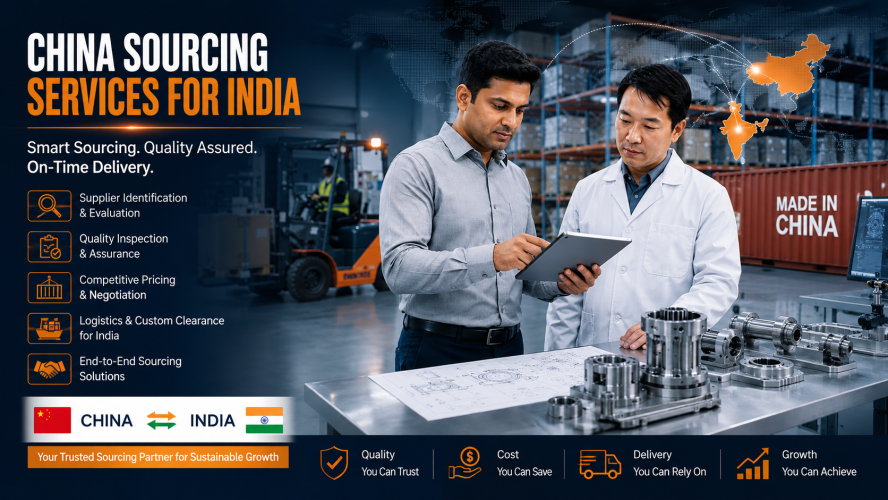
Mitigating the Sourcing Blindspot: Why Indian Manufacturers are Moving from B2B Platforms to Controlled China Sourcing Partnerships
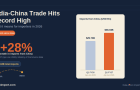
For procurement headers across Indian manufacturing hubs, the reliance on Chinese industrial inputs is an undeniable reality. In the fiscal year 2025–26, China surpassed the United States to emerge as India’s largest trading partner, with bilateral trade reaching a historic $151.1 billion. (Source)
Indian imports from China surged to $131.63 billion, driven heavily by industrial capex requirements, electrical machinery, components, and electronic integrated circuits. (Source)
While the volume of trade has grown, so have the operational bottlenecks. Reliance on open-market B2B sourcing platforms often exposes manufacturing supply chains to major compliance liabilities, unpredictable transit times, and unverified supplier claims. For large-scale manufacturing operations, a 2% variance in raw material specifications or a 10-day delay in customs clearance can halt an assembly line, cascade costs, and compromise market delivery.
The Limitations of B2B Sourcing Platforms
Open-market portals are valuable for preliminary product exploration, but they fail to address the complex requirements of high-volume manufacturing supply chains.
1. Superficial Supplier Audits
A gold badge or digital certificate on a platform cannot replace physical factory verification. Many procurement teams have inadvertently contracted with trading companies masquerading as primary manufacturers, resulting in unauthorized tier-2 subcontracting and inconsistent product quality.
2. Disjointed Quality Control & Logistics
Relying on a factory-appointed inspection agent creates an inherent conflict of interest. Furthermore, when the inspection, warehousing, and maritime logistics are handled by fragmented entities, accountability dissolves the moment a cargo dispute arises.
3. The Indian Customs and Anti-Dumping Landscape
Navigating Indian customs requires specialized regulatory expertise. With strict enforcement of Bureau of Indian Standards (BIS) norms and the strategic imposition of Anti-Dumping Duties (ADD) on specific steel, chemical, and electronic components, a simple error in Harmonized System (HS) classification can lead to significant delays and severe financial penalties at Indian ports.
Struggling with a delayed shipment or complex customs clearance?
Don’t let rigid trade compliance halt your factory line. Talk immediately to our Indian trade compliance experts for an instant route review.
The We Do Import Framework: End-to-End Supply Chain Control
We Do Import replaces transactional sourcing with a managed, risk-controlled ecosystem designed specifically for the Indian manufacturing sector. With over 22 years of real-world trade experience, we bridge the gap between Chinese industrial hubs and Indian production lines.
1.On-Site Factory Auditing & Technical Verification:
Phase 1: Supplier Qualification.
A Strategic Comparative Analysis
Evaluating the two approaches highlights the differences in operational security:
| Operational Parameter | Conventional B2B Sourcing Platforms | The We Do Import Managed Protocol |
| Supplier Vetting | Self-reported digital profiles and online ratings. | In-person physical factory audits, capacity checks, and background verifications. |
| Quality Control | Remote, photo-based approvals or factory-appointed third-party checkers. | Strict on-site AQL sampling and technical specification reviews before container loading. |
| Customs Management | Shifted to the buyer; generic documentation often causes port delays. | Proactive HS code optimization, BIS alignment, and thorough Anti-Dumping assessment. |
| Accountability | Fragmented across the supplier, forwarder, and local customs broker. | A single, accountable partner managing the entire process from the factory to your warehouse. |
Industrial Advisory: Successful supply chain management isn’t just about finding the lowest nominal ex-works price; it’s about minimizing the Total Cost of Ownership (TCO) by eliminating port delays, defective batches, and compliance penalties.
By establishing direct, audited, and strictly managed import corridors from China’s industrial hubs, We Do Import helps Indian manufacturers protect their margins and maintain uninterrupted production schedules.
Ready to de-risk your international procurement infrastructure?
Partner with 22+ years of real-world trade expertise. Let’s design a secure, highly controlled import pipeline from China straight to your assembly line.




Leave a Reply